
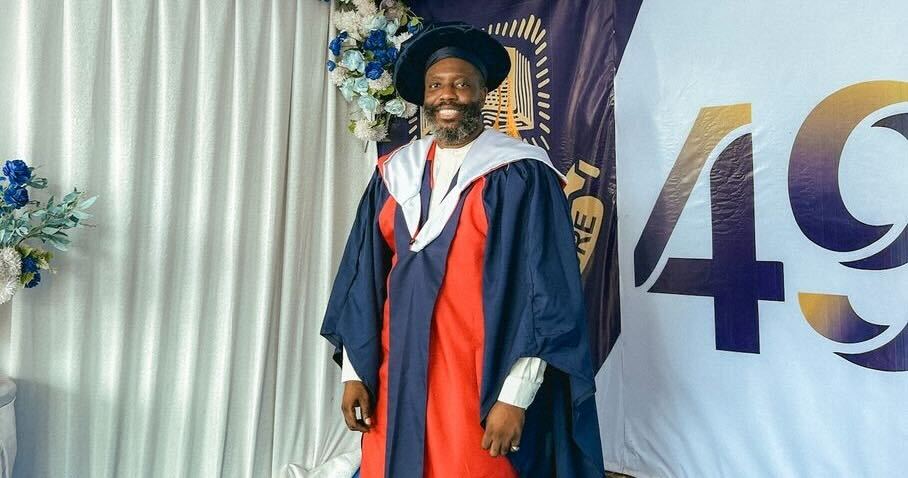
For decades, tertiary institutions across Africa have grappled with a persistent criticism: that brilliant, peer-reviewed academic research too often remains trapped inside university libraries, failing to translate into viable industrial solutions or economic development. In a thought-provoking feature published by The Nation titled “Addressing deficits in research, theory and practice,” Professor Segun Aina confronted this disconnect head-on.
Speaking as the youngest full Professor of Computer Engineering at Obafemi Awolowo University (OAU), Ile-Ife, Dr. Aina laid out a pragmatic roadmap for modernising the relationship between academia and the private sector, insisting that the ultimate metric of scholarly rigour must be its capacity to solve local, domestic problems.
Why Academic Research Gathers Dust
During the interview, Professor Aina diagnosed why so much scientific inquiry fails to make the leap from theory to commercialisation. He noted that traditional academic models often encourage researchers to work in isolation—developing theoretical assumptions first and only later hoping that corporations will adopt the findings.
“What is the value of that research to solving domestic problems?” Professor Aina challenged. “Rather than do the research and wait for companies to come and snap it up, can the companies come in a bit earlier and say: these are our problems; these are the things that we need solutions for? Having research sit on the shelf is a common problem because, world over, only a portion of academic research makes it into active use in industries.”
By bringing private sector stakeholders into the laboratory at the ideation stage, he argued, universities can direct complex investigations—such as his own primary specialisation in digital signal processing and image analysis—toward immediate, scalable technological solutions.
Co-Designing Curricula and Integrating Vocational Skills
To permanently close the deficit between classroom theory and industry practice, Professor Aina advocated for a structural overhaul of how university syllabi are developed. He insisted that enterprise leaders and subject matter experts must be given a permanent seat at the table during statutory curriculum reviews.
Rather than universities guessing what baseline competencies fresh graduates require, industry leaders must define their operational demands from the outset. Furthermore, Professor Aina championed the aggressive integration of Technical and Vocational Education Training (TVET) directly within university engineering modules. By embedding hands-on, vocational problem-solving into formal degree frameworks, institutions can ensure that graduates emerge not just as theoretical scholars, but as highly capable, self-reliant practitioners ready to drive Nigeria’s digital economy.
Read the full article here: Addressing deficits in research, theory and practice